
From Sex in the City to Sex in the Sixties: The Conversation Nobody Is Having
Why Would a Postmenopausal Woman Want Sex? (Seriously.)
Here is a sensitive subject, but I am going there anyway.
In conversations around libido I often hear: “I feel like my body just switched it off.”
And you would be right. It did.
But here is what I am also hearing — underneath, quietly spoken, heavy with shame: “I feel like I am failing him.”
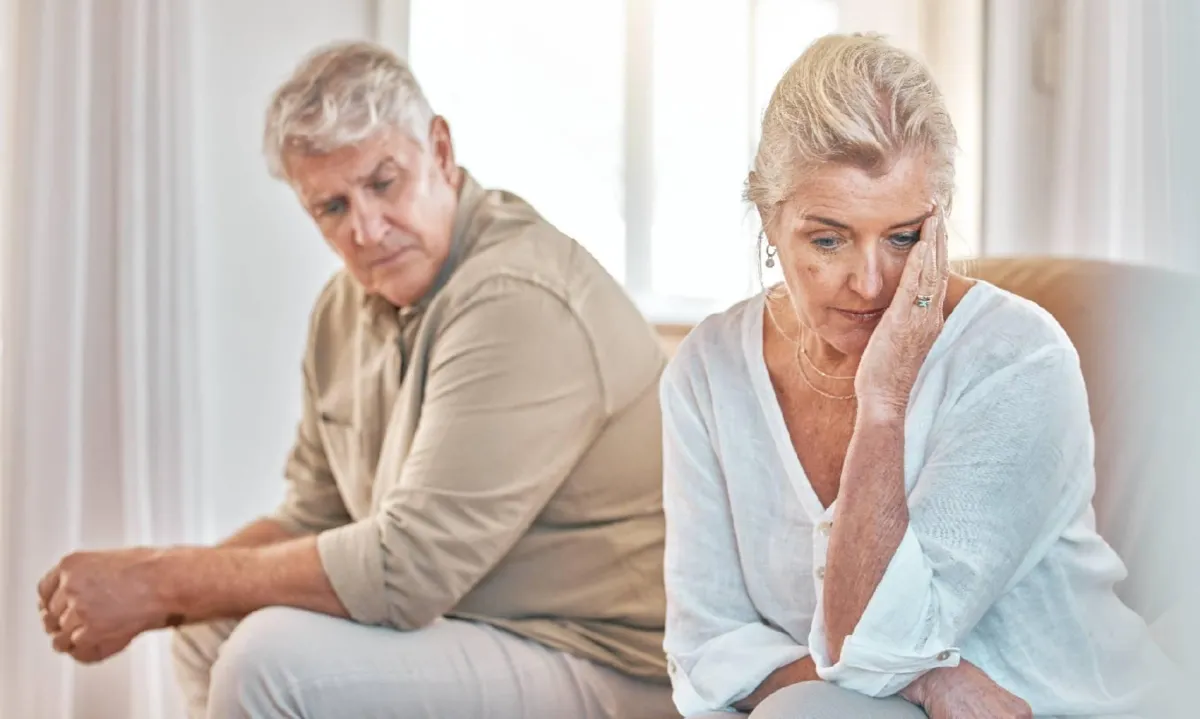
And that is where we need to pause. Because the problem might not be your libido. The problem might be a conversation you have never had.
The Reality of Bodies That Have Changed
Let us be honest about what we are working with here.
Her body:
•Gravity has not been kind. The body you see in the mirror does not make you feel like a sexual being anymore.
•Estrogen loss has made the tissue thinner, drier, less elastic. Intercourse feels uncomfortable at best, painful at worst.
•The oxytocin hit from sex is now less than an evening laughing with girlfriends.
•UTIs happen way more often than they did in your thirties.
•Your body is saving its testosterone to convert into estrogen — for your brain, your bones, your heart. Libido got deprioritized. On purpose.
His body:
•He is aging too. Things do not work the way they used to.
•He may need medication just to show up.
•He is probably dealing with his own insecurities about his changing body.
•He may be interpreting your decreased desire as rejection, when it is biology.
And yet — we are both supposed to perform like we did in our thirties?How did something that used to be so wonderful become white-knuckling your way through Saturday morning?
The Pharmaceuticals Required
Think about this for a moment.
Sex after menopause often requires pharmaceuticals for BOTH parties. A pill for her desire. A pill for his erection. Lubricant. Planning. Scheduling. Effort.
All to recreate something that used to happen spontaneously.
The root of the problem is not a deficiency of pharmaceuticals.
At what point do we ask: is this what we actually want? Or is this what we think we are supposed to want?
The Biology Nobody Explains
Here is what your doctor probably did not tell you about why your body switched off the desire:
Testosterone gets repurposed.
After menopause, your ovaries still produce small amounts of testosterone. But your body converts most of it into estrogen via aromatase — because it needs estrogen for your brain, your bones, your cardiovascular system. The body is choosing survival over libido. That is not dysfunction. That is triage.
Estrogen loss changes the tissue.
The vulvar and vaginal tissue becomes thinner, drier, less elastic, more prone to tearing and infection. The nerve endings that made touch pleasurable are less responsive. This is not “in your head.” This is measurable, physical change.
The neurochemistry shifts.
Dopamine (desire, anticipation) and oxytocin (bonding, pleasure) both decline. The neurological reward from sex genuinely decreases. Your brain is no longer giving you the same payoff it used to.
The nervous system is in overdrive.
Arousal requires parasympathetic activation — rest and relax. If your nervous system is stuck in sympathetic mode (and whose is not in menopause?), your body is in survival, not connection. You cannot force arousal from a body that thinks it is under threat.
None of this is a disorder. This is biology doing exactly what it is designed to do.
The Distress Question
Here is the thing about “hypoactive sexual desire disorder” — the clinical diagnosis requires that low desire causes YOU distress.
Not your partner’s distress. Not your doctor’s concern. Not a pharmaceutical ad making you feel broken. YOUR distress.
A study of Australian women found that 69 percent had low desire after menopause — and more than half were not distressed by it at all. They were fine. Happy, even.
So who is distressed? And why?
Are the women who report distress genuinely wanting more for themselves? Or are they distressed because they feel like they are failing someone else’s expectation?
There is a difference. And it matters. Because if the distress is coming from external pressure — from a partner, from culture, from advertising — then the treatment is not a pill. The treatment is a conversation.
The Partner Piece
And while we are being honest — let us talk about his side of this.
His desire may be lower or gone too. He may be distracted. He may have stopped investing the effort to make it pleasurable for you a long time ago.

Somewhere along the way, the romance stopped. The effort stopped. The foreplay became perfunctory or disappeared entirely. And now the expectation is that you should still show up with enthusiasm?
Intimacy is not a one-way street. If one person stopped investing, it is not the other person’s job to manufacture desire out of nothing.
And yet — most couples have never actually talked about any of this. The silence is where shame grows. And resentment. And distance.
For the Couples Who Still Want It
If both of you genuinely want an active sex life — fantastic. I am not here to tell anyone they should not want sex. Some couples in their sixties, seventies, and beyond have fulfilling sexual relationships. That is wonderful.
But that is not everyone. And it does not have to be you.
The point is not that sex is bad or wrong or over. The point is that the expectation that it should look the same as it did decades ago — that expectation is the problem.
For the Women Being Pressured
And if you are feeling pressure — from a partner, from society, from pharmaceutical ads, from a doctor trained on pharma-funded research — please hear this:
You do not owe anyone a libido.
Your body is not malfunctioning. It is reallocating resources. It is prioritizing survival. It is doing exactly what it is supposed to do.
The 43 percent of women who are “sexually dysfunctional”? That number came from a study that counted anyone with two months of low desire in a year. Two months. That is grief. That is stress. That is being human.
The disease was manufactured to sell a drug. Do not let it sell you shame.
The Honest Conversation
Here is what I wish for you:
A conversation with your partner — or with yourself — that starts with honesty instead of expectation.
•What do you actually want?
•What does connection look like for you now?
•What would feel good — emotionally, physically, relationally?
•What are you doing out of genuine desire, and what are you doing out of obligation?
And in a relationship where intimacy matters — you get to have that conversation. Not because you owe it to anyone. But because honesty IS intimacy.
Talking about what closeness looks like now. What you each actually want. What works and what does not. What connection means at this stage of life.
That conversation is not a replacement for intimacy. That conversation IS intimacy.
You Get to Write a New Script
Your body changed. His body changed too. Gravity has not been kind to either of you.
The old script — the one from your thirties, the one from movies, the one that says sex has to look a certain way — does not work anymore.
And that is okay.
You get to write a new one. Together.
What might that look like?
•Honesty about what you actually want — not what you think you are supposed to want
•Curiosity about what closeness could look like now
•Touch without expectation
•Connection without performance
•Intimacy that does not require either of you to be 35 again

The Bottom Line
Even if you never want sex again — that is not a disease.
You do not owe anyone a libido. You do not owe anyone a performance.
But you deserve a partner you can be honest with. And you deserve a relationship where intimacy can evolve — not disappear, but change shape.
The conversation is how you get there.
And that conversation? That is not the consolation prize.
That is the whole point.